The Global Resilience NetworkGlobal Challenges Forum Foundation
Global Resilience
Consortium
Consortium home

Walter L. Christman, PhD

The Age of Convergence trilogy

These three books set out the vision the Global Resilience Consortium exists to put into practice. The first asks what we owe one another. The second describes institutions through which communities can act together. The third shows how people can learn from the consequences of that action and carry what they learn across borders.

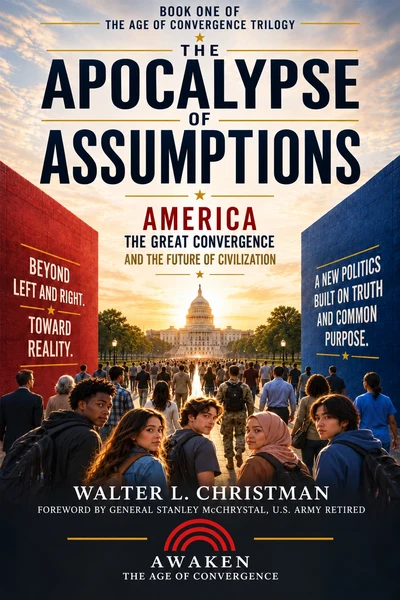
Cover of The Apocalypse of Assumptions

Book I · Awaken

The Apocalypse of Assumptions

America, the Great Convergence, and the Future of Civilization

What happens when institutions still promise freedom and dignity, but people can no longer count on either? Christman looks at the gap between public promises and lived experience through American history, the rule of law and the pledge of “never again.” He asks what a society owes people whose freedom it has the power to protect.

The book gives the Consortium its starting point. Reciprocal freedom, relational sovereignty, stewardship and a covenant of mutual obligation explain why institutions join and to whom they are accountable. Members affirm those commitments in the Global Resilience Covenant.
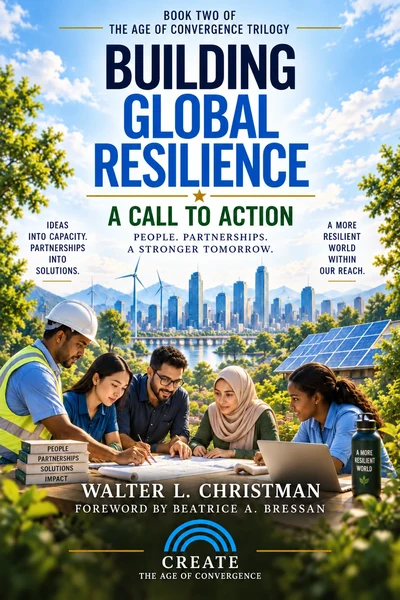
Cover of Building Global Resilience

Book II · Create

Building Global Resilience

A Call to Action

How can communities act together across borders and still decide for themselves what matters? Christman examines how shared knowledge becomes useful, how partners earn trust and how institutions can commit people and resources to a common purpose. Civilization 2050 invites members to ask what today’s choices will leave the next generation.

This volume sets out the institutional design. 1M2030 connects youth leaders. Global Resilience Partners connect people and institutions. Regional Resilience Readiness Centers build regional capacity, and the Global Challenges Situation Room follows emerging risks. Global Resilience University helps communities learn from one another. Member institutions guide these five distinct initiatives through the annual online General Assembly.

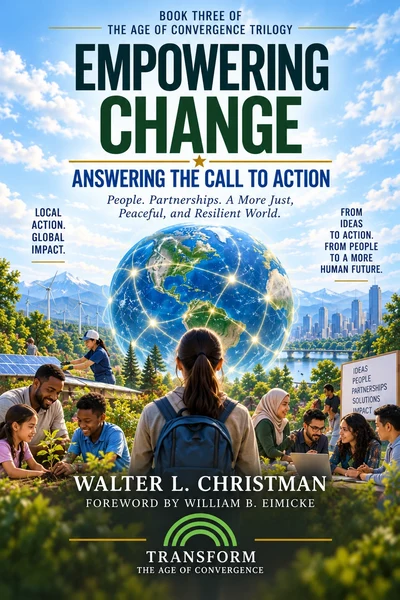
Cover of Empowering Change

Book III · Transform

Empowering Change

Answering the Call to Action

How do people affected by a decision gain a lasting say in it? Christman follows learners and partners as they frame a problem together, test a response and judge its effects. At a Covenant Table, participants name what they owe one another, hear from those affected and decide what to change.

For the Consortium, this is how experience in one community can inform another. Through youth exchanges, institutional partnerships and the University, participants can share what worked, what caused harm and what they would do differently. Those lessons give member institutions evidence to bring to the Assembly.