The General Assembly
Admitted institutions will meet online in ordinary session once each year. Each will have one vote. The Assembly elects officers, approves the budget and membership fees, and votes on the annual reports and accounts.
Membership governance
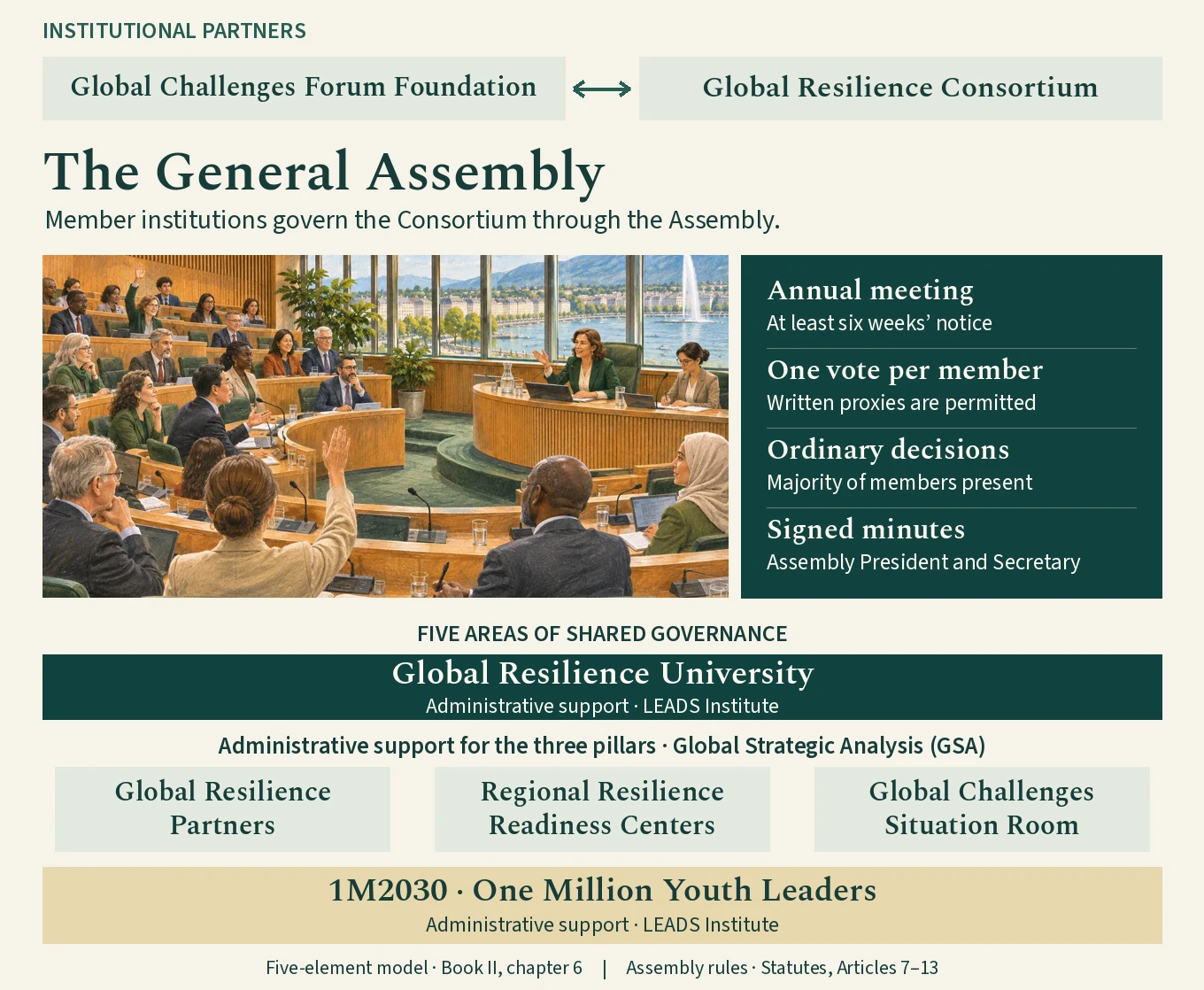
Member institutions set the direction of the Consortium through the annual online Assembly.
Signed statutes · Articles 7–13
The Consortium will hold its Annual General Meeting online. Each admitted Group I institution will have one vote and may give a written proxy to another member. The date of the next online Assembly for admitted members will be announced with the formal notice.
The ordinary General Assembly meets once a year. The Executive Director gives at least six weeks’ notice and sends the convocation and proposed agenda at least four weeks before the meeting. At least 20% of members may request an extraordinary session in writing with an agenda.
The meeting notice will include access arrangements, the agenda, how to file a written proxy and how to request a secret ballot.
The meeting is valid regardless of attendance. Ordinary decisions require a majority of members present. The President has a casting vote in a tie. Amending the statutes or dissolving the association requires two thirds of members present. Voting is by show of hands unless at least five members ask for a secret ballot.
The President chairs the Assembly and signs its minutes with the Assembly Secretary. The Assembly approves budgets and fees, adopts accounts, appoints the auditor and elects Board members. The Board implements resolutions and may appoint expert committees. The Executive Committee handles day-to-day matters and admission decisions.
Governance
The Consortium is a Geneva-based association established in association with the Global Challenges Forum Foundation. Its signed statutes set out the authority of members and officers.
Admitted institutions will meet online in ordinary session once each year. Each will have one vote. The Assembly elects officers, approves the budget and membership fees, and votes on the annual reports and accounts.
The Board administers the association, prepares Assembly resolutions and puts those decisions into effect. It can appoint expert committees for specific tasks.
The Executive Committee handles day-to-day affairs and decisions about admission, resignation and exclusion under the statutes.
Between annual General Assemblies, the President can create operational positions and titles as the work requires, appoint people to carry those responsibilities, and define their mandates. Under Articles 13 and 14 the President appoints the Executive Committee from among the directors, directs its policy work, and may grant individual or joint powers of representation. The Assembly elects the statutory officers and the Board. The Executive Committee decides admissions.
The Consortium is recruiting its first members. The Geneva Commercial Register extract lists Walter Leslie Christman as President with individual signature, Beatrice Bressan as Vice President and Pedro Lagonegro as Executive Director. The Vice President and Executive Director have joint signature with each other. The Secretariat coordinator and admissions committee appointments remain open. Founding inquiries go to Walter L. Christman, Founder and President · consortium@globalchallengesforum.org. The Secretariat is the intake service for those inquiries.
The chair confirms the voting arrangements before opening a binding ballot. The President and Assembly Secretary sign the minutes.