
Who would belong?
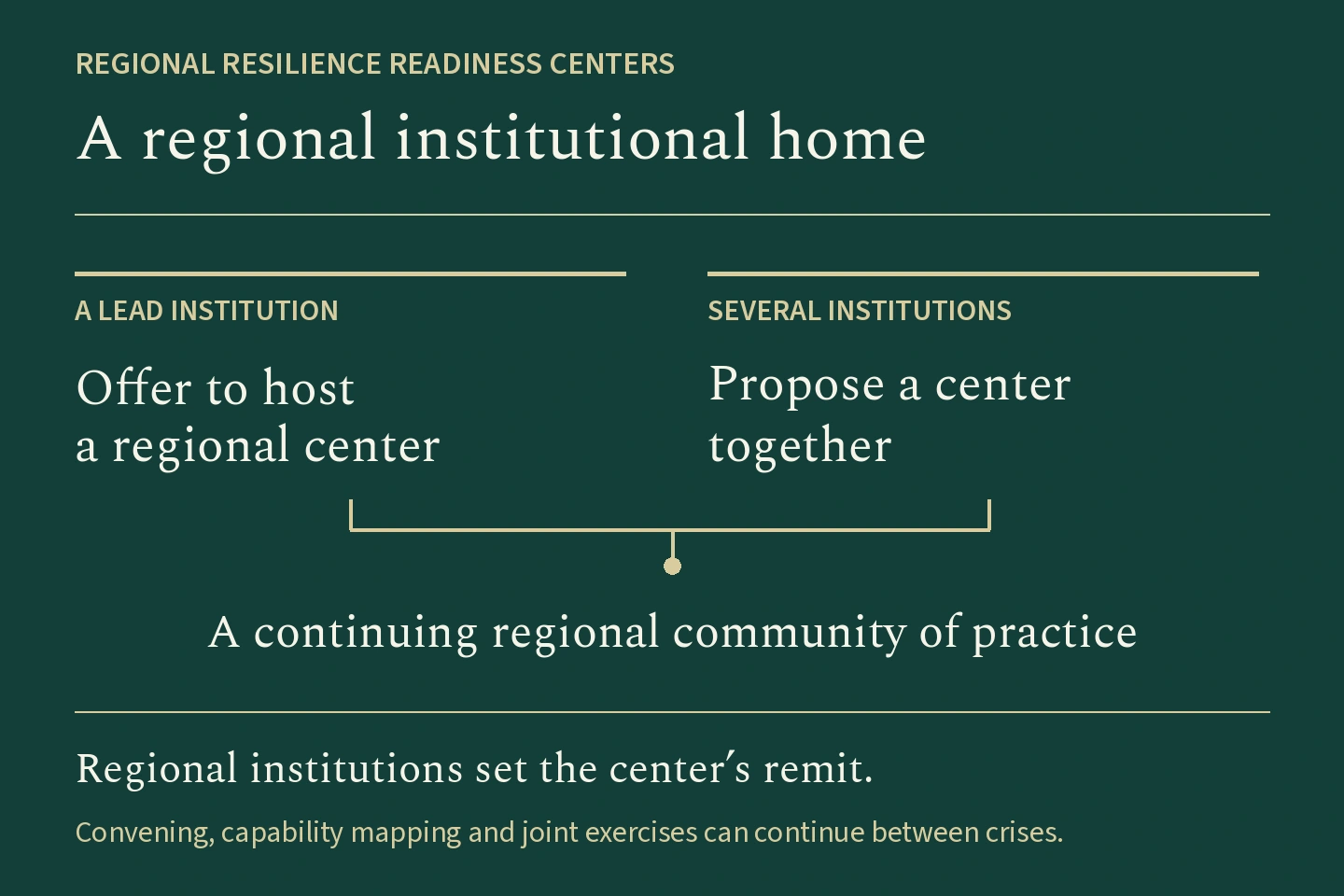
A prospective host identifies peers with responsibilities in the region. These might include public authorities, universities, professional associations, civic groups, youth networks and businesses. Each retains its mandate. A university that can contribute faculty or exercise design can participate without becoming the host.
What makes a center ready?
A river-basin region might sustain cooperation among water authorities, agricultural institutes and universities across national borders. Participants can map capabilities, compare plans and rehearse decisions together. Readiness means knowing which institutions can act, where they depend on one another and which gaps need investment.
What GSA could support
Global Strategic Analysis could consult prospective hosts, map institutional capacity, compare host proposals and help participants define the geography, remit and resources of a center. Once a center takes shape, GSA could support regional exercises and exchanges among centers. Hosts determine their regional priorities.
What members could support together
The Assembly could consider funding for consultations with prospective regional hosts and a first round of readiness exercises. A host’s own personnel, facilities and participation would be agreed with that institution.